
Womens Detention Center Release Route
GDC's locations index identifies Womens Detention Center at Claxton as a state facility serving adult female felons. That agency relationship is more important than the county shown in the street address. A person held there is under a Georgia state detention path, not an Evans County sheriff booking simply because the building is in Evans County. Release evidence therefore comes from GDC, the Georgia Department of Community Supervision, and the court that imposed or changed the sentence or probation sanction.
The possible outcomes must be kept separate. A woman may complete a probation detention sanction and return to community supervision. She may move to another state placement. A court can issue an order that changes the custody term. GDC can post a new status or release field. None of those events is proven by absence from a local jail roster. The county roster concerns present local custody and does not track women through a state detention sentence.
Search Womens Detention Center Records
Begin at the Georgia Department of Corrections Find an Offender page. A GDC ID is the best search key because it points to one state corrections identity. If the number is unavailable, enter a name and compare every useful identity field. Similar names are common, and a name alone does not prove that the result belongs to the person sought.
- Search the official GDC system by GDC ID or by first and last name.
- Compare sex, age-related information, race, offense, sentence, and facility history.
- Open the detail and read the current status, location, and release-date fields.
- Check DCS when the status or court history points to probation or parole supervision.
- Review the sentencing or revocation docket to learn why detention ended.
A GDC public detail may show an ID, state offender photograph, current or former location, offense and sentence summary, sentence start, status, and a release-related date. The label must be read as displayed. A maximum or tentative release field is a planning date. An actual release date records an event. Probation or parole wording indicates that legal oversight can continue after the person leaves confinement.
The official form displays the identity inputs used to locate a state record. Consult the GDC offender search source and match more than a name.
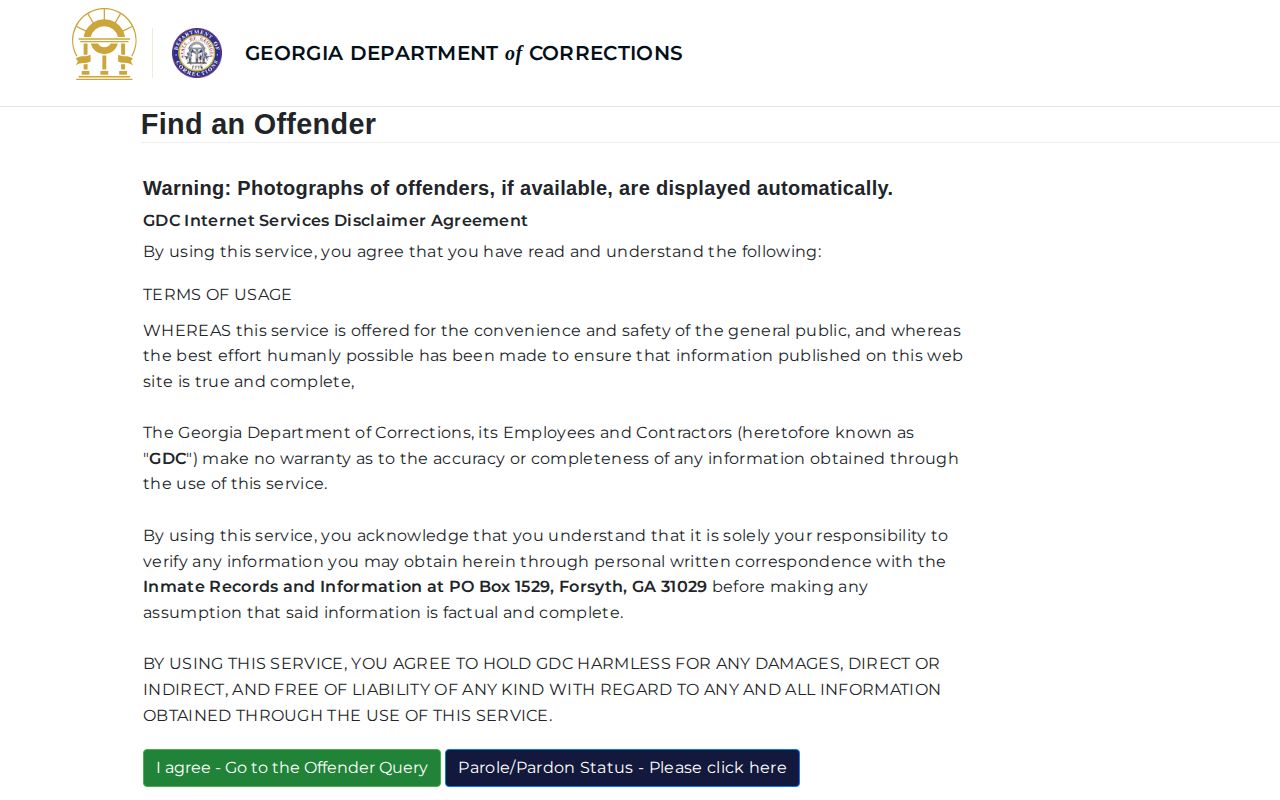
This statewide search can preserve a past state-custody record after release, unlike a current county jail list that may remove a person once custody ends.
Womens Center Probation Release
The research identifies probation detention as a key release context for this facility. A probation detention sanction is a period of confinement tied to a probation case or court action. Completion of that detention does not always end probation. The person may return to the community with reporting duties and other court-approved terms. For that reason, a GDC release entry answers only the confinement question. DCS and the court answer whether supervision remains and what order controls it.
| Question | Best official source | What to look for |
|---|---|---|
| Did state detention end? | GDC offender record | Status and actual release field |
| Does probation continue? | DCS | Active supervision and office assignment |
| Why was detention imposed? | Sentencing or revocation court | Order, sentence, modification, or revocation |
| Was she transferred? | GDC facility history | New state location or movement entry |
| Is the public result unclear? | GDC open records | Release, discharge, or transfer record |
DCS supervises felony probationers and parolees. Its field office location tool should be used instead of guessing which office now covers the case. Office routing can change. The court docket is also vital when detention resulted from an alleged violation, a revocation, or a modified sentence. A docket can show the judge's order and later case events, but GDC remains the better source for the physical state-custody exit.
- Probation detention
- A confinement period connected to probation or a court sanction.
- Revocation
- A court action that changes probation after an alleged or proven violation.
- Community supervision
- Legal oversight in the community, commonly administered by DCS.
- Transfer
- Movement to another agency or facility rather than release to the community.
Womens Center Court Release Orders
A court record can explain facts that an offender status line does not. It may show the original probation sentence, a detention condition, a revocation order, a modification, credit for time served, or a discharge. Georgia's PeachCourt and re:SearchGA portals are online entry points, though coverage, document access, account rules, and cost can vary. The clerk of the sentencing court remains the official custodian when the needed order is not available online.
Use the county where the sentence or probation case was entered, not automatically Evans County. A woman can be housed in Claxton after a case from another Georgia county. The location of the facility does not change the court that issued the sentence. Search by full name and case number when known. Then compare the charge, filing date, sentence, probation terms, revocation events, and completion entries. A court order may explain why release was authorized, while the GDC record establishes when the state detention event ended.
Missing online information is not proof that the case never existed. Georgia record restriction under O.C.G.A. 35-3-37, a sealed matter, first-offender treatment, juvenile confidentiality, system limits, or a spelling difference can affect visibility. First-offender discharge under O.C.G.A. 42-8-60 and following provisions is also distinct from physical release from detention. When the legal status matters, obtain the order from the proper clerk rather than infer it from an empty search result.
Request Womens Center Release Records
The GDC offender page is a practical lookup, but a more complete release or discharge record may require an open-records request. Use the GDC agency open-records officer page. Include the woman's full legal name, date of birth if known, GDC ID, the Womens Detention Center name, and an approximate custody period. Ask for a defined item such as the release date, discharge status, transfer entry, or sentence-computation summary.
Georgia's Open Records Act is found at O.C.G.A. 50-18-70 through 50-18-77. Agencies generally must respond within three business days. The response may produce the record, identify the legal basis for redaction or withholding, or state when the record will be available. Lawful costs can apply for search, retrieval, redaction, and copies. The supplied research gives no facility-specific fee schedule, records email, or local records hours for Womens Detention Center, so those details should be confirmed with GDC rather than invented.
If GDC says the requested document belongs to the court, contact the sentencing court's clerk. If the question is active probation supervision, contact DCS through its current office finder. If the result suggests parole, consult the State Board of Pardons and Paroles. Each source controls a different part of the story, and a narrow request should go to the agency that created that record.
Womens Detention Center Contact
The stable official source is the GDC locations index, which lists Womens Detention Center at 8662 U.S. Hwy 301 North, Claxton, Georgia 30417. The research warns that an individual facility URL may change or return an error as GDC updates its pages. Use the locations index to confirm the current listing before relying on a moved page. No facility phone, public office hours, mail address, or visiting schedule was provided in the research, so the page does not claim one.
Official listing
Womens Detention Center
8662 U.S. Hwy 301 North
Claxton, GA 30417
Agency: Georgia Department of Corrections
Population: Adult female felons
Source: GDC locations index
The source image below comes from the official Georgia Department of Corrections locations directory.
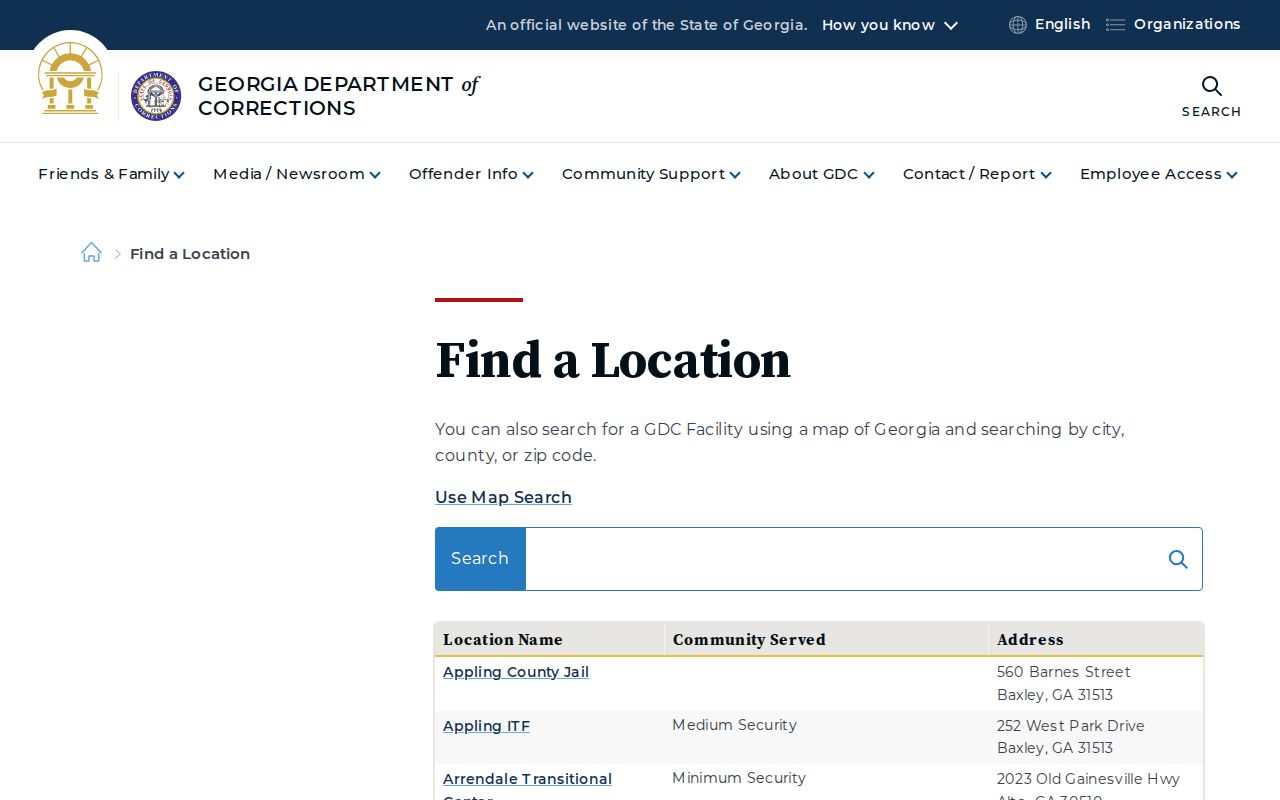
The directory confirms that the center belongs to GDC, supporting the state release route rather than an Evans County sheriff roster search.
Claxton Womens Release Confusion
Claxton has both county and state correctional connections. Womens Detention Center and Smith Transitional Center are GDC facilities. Evans County Sheriff's custody is a separate local system, and the Tattnall interface found in the research is mainly a current jail roster. A person can therefore be physically confined in Evans County without being an Evans County jail detainee. Search terms based only on the city or county often hide that crucial difference.
Start by identifying the operator shown on the record. GDC means state custody. A sheriff or jail agency means local custody. DCS means community supervision, not confinement. The court controls its orders and sentence history. Once the operator is clear, each next step becomes more reliable. For a Womens Detention Center release, GDC establishes the state status, DCS can confirm ongoing supervision, and the sentencing court explains the probation or revocation order.
The distinction also prevents a false conclusion about freedom. Release from a detention sanction can lead back to probation. Transfer from the center can leave the person confined elsewhere. A changed facility listing can reflect a web update rather than a custody event. Read the status and source together. The Evans County released inmate lookup provides the wider custody map when it is not yet clear whether the person was held locally or by the state.
Verify Womens Center Discharge
A complete verification uses more than one record when the public status is unclear. First, confirm the identity in GDC and note the exact status and date label. Second, look for active DCS supervision if probation or parole appears. Third, review the court order from the sentencing county. If the sources conflict, contact the relevant custodian and give the GDC ID or case number. Do not assume that a current roster, an old photograph, or a facility address proves present custody.
“Released” and “discharged” can describe different legal stages. Release can mean leaving physical detention while probation remains. Discharge can mean completion of an identified sentence or supervision term, depending on the record. A probation order may keep obligations in place after the gate release. Using the exact terms from GDC, DCS, and the court keeps those stages clear and provides a sound answer to where the person went and which authority still holds the record.