
Evans County Release Date Types
A projected, tentative, or maximum date is an estimate or sentence-calculation field. It is not proof that a person walked out of a facility on that day. An actual release date records a completed custody change. Georgia Department of Corrections records may use different labels based on the person's status, including a release-date field, parole eligibility date, actual release date, or discharge information. Read the label shown on the individual GDC record. Do not convert one field into another.
The distinction is sharp in Evans County. Someone awaiting trial in sheriff custody usually has no calculated prison discharge date. Bond, dismissal, a new order, another agency's hold, or transfer may decide when that person leaves. A sentenced person in GDC custody has a state sentence computation. Someone can also leave confinement on parole yet remain supervised by the Georgia Department of Community Supervision.
Find an Evans County Release Date
Start with custody type, not a broad name search. The Evans County Sheriff's Office record controls a local jail release. GDC controls a state-prison or state-detention calculation. The court explains bond, sentencing, dismissal, probation, or revocation. This order keeps a county booking from being mistaken for a state sentence.
- Identify the holding agency and compare the person's full name and other public identity details.
- For state custody, open the GDC Find an Offender search. Use the GDC ID when known, or search by name and compare the record carefully.
- Read the exact status, facility, sentence, and release-date label shown. A Smith Transitional Center or Womens Detention Center case follows this state path.
- For Evans County jail custody, contact the sheriff's records channel and check the court docket for bond, sentence, or release authority.
- After the event, verify an actual release or transfer instead of relying on the earlier projection.
The Tattnall County and Synergistic interface is mainly a current-custody source. An Evans County entry disappearing from it does not prove release. The person could have transferred, been moved under a hold, or simply no longer appear in the live data. The full county search and record path is explained on the Evans County released inmates home page.
Georgia State Release Calculations
A state release date begins with the court's sentence, but the calendar alone is not enough. GDC records can reflect sentence start, jail credit, the controlling offense, maximum or tentative timing, and an actual release when custody ends. Parole eligibility is a separate concept. It means the law may permit consideration for parole, not that the board has granted release.
Georgia law does not support a single “85 percent” rule for every person. Serious violent felony sentencing under O.C.G.A. 17-10-6.1 carries special punishment and parole restrictions. Parole eligibility is addressed by O.C.G.A. 42-9-45 and related board rules. The offense, sentence date, sentence terms, statutory restrictions, credits recognized by the custodial agency, and parole action all matter. The official GDC and parole records should control the answer for a state inmate.
County jail time is different. A person serving a short local sentence may never receive a GDC record. The Evans County court and sheriff records explain jail credit, local sentence completion, bond, release orders, and transfers. If the court sentences the person to state time and the sheriff transfers custody to GDC, the state computation then becomes the key date source.
Why Evans Release Dates Change
A release estimate can change because it is built from live legal and custody facts. A new court order can shorten, extend, or reshape the custody term. Credits may be recalculated. Another agency may assert a hold. Parole action can affect the route out of prison without ending the sentence. These events should be read from the agency record, not guessed from the old date.
| Factor | Effect on the date or release |
|---|---|
| Sentence or jail credit | A corrected judgment or credit calculation can alter the remaining term. |
| Disciplinary or program credits | A custody agency's lawful credit decision may change a tentative calculation. |
| Detainer or hold | The person may leave one agency yet remain held for another county, state, federal, or immigration matter. |
| Court order | Bond, dismissal, resentencing, revocation, or other action can change custody at once. |
| Parole decision | A grant, denial, deferral, rescission, or revocation can change the expected path from state custody. |
| Transfer | Release from Evans County custody may mean transfer to GDC or another jail, not freedom in the community. |
Confirm Evans County Inmate Release
Use two records when the date matters. For a county detainee, ask the Evans County Sheriff's Office whether the person remains in custody and request the release date, time, reason, authority, or transfer destination if those fields are releasable. Then review the court docket. A bond order or sentence can explain why the jail status changed, while the jail record documents the custody event itself.
For a state inmate, return to the GDC detail after the expected date. Look for the actual status and release or discharge entry. If parole follows, use the State Board of Pardons and Paroles and the Department of Community Supervision office lookup to distinguish release under supervision from full discharge. Georgia VINELink can supply a custody-change alert when the contributing agency participates, but it is not a certified release record. The VINELink Release Check explains the one-person search and notification flow.
Note: A person may be released by one agency and immediately transferred to another, so always read hold and destination fields.
GDC Evans Release Date Fields
The official state search is the best public starting point for people who entered GDC custody from an Evans County case or lived at a GDC site in Claxton. Search results may include a GDC ID, identity details, current status, facility, offense and sentence data, a state offender photo, supervision references, and a release-date field. A released state inmate can remain searchable after leaving a facility. That differs from a live county jail roster, where the booking may disappear.
The Georgia Department of Corrections offender-search page shows the public entry used for this lookup.
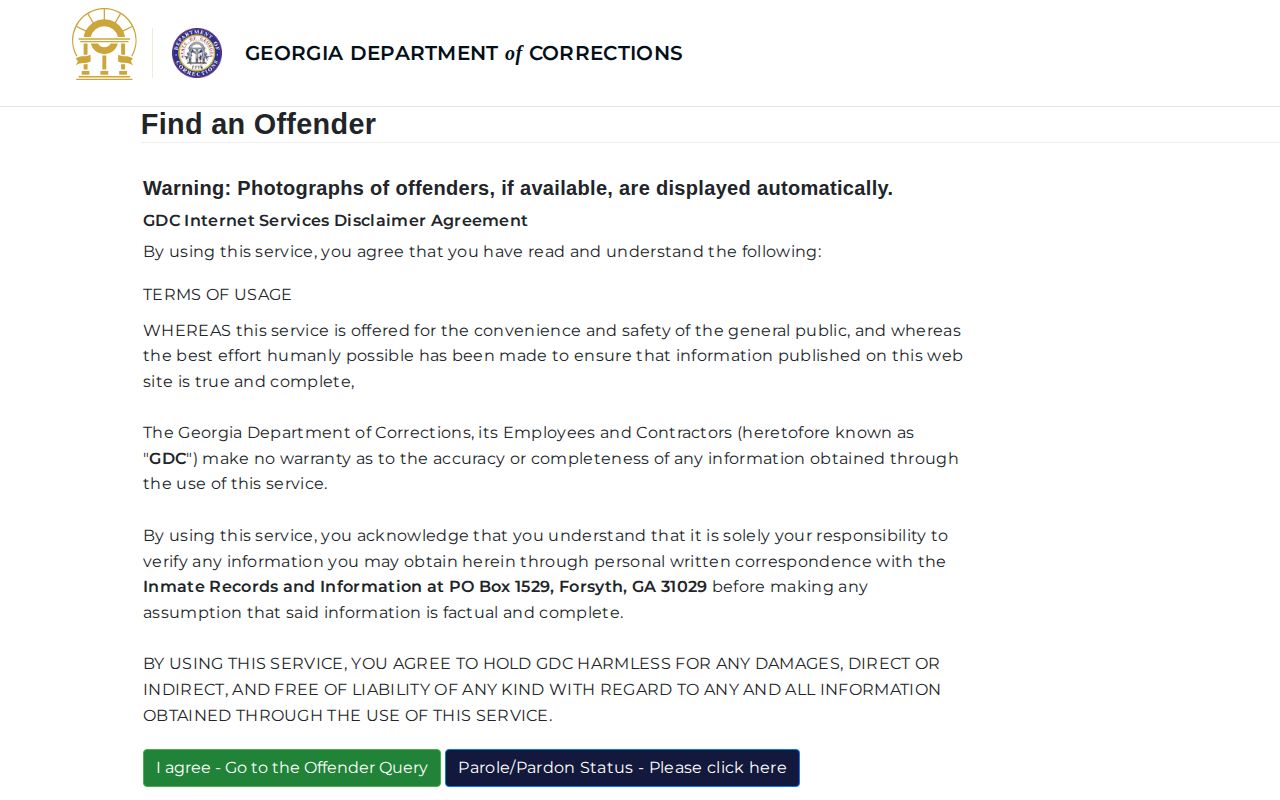
Do not call the state photo an Evans County jail booking image. It belongs to the GDC record. Also, do not assume a missing GDC result means the person was never held locally. Short county custody may never create a state offender entry.
Evans Release Dates Need Two Tracks
Evans County release-date research has a distinctive split. Georgia state sentence rules apply only when GDC controls the custody record. A person booked locally may instead leave on bond, time served, dismissal, a court order, or transfer. That local event depends on the court, sheriff record, jail credit, and any active hold. Applying a prison percentage to that county booking produces the wrong answer.
Likewise, parole eligibility does not equal a promised exit. The parole board may grant, deny, defer, rescind, revoke, or take another action allowed by the case posture. Serious violent felony provisions can sharply limit parole. For that reason, the GDC field, sentencing law, and board record must be read together for a state case. For a county-only booking, ignore the GDC date path and use the sheriff and court.
Claxton's correctional footprint makes this distinction especially useful. Smith Transitional Center and Womens Detention Center are state facilities in Evans County. Their physical location does not turn their residents into Evans County jail inmates. Releases from those facilities remain GDC events, often followed by state supervision records.
A court docket can add the reason behind the date. Evans County case records may show a bond order, sentence, dismissal, probation term, revocation, or first-offender status. That information can explain why custody changed, but the docket does not replace the agency's release event. When an online docket is incomplete, the local clerk remains the official custodian. Keep the timeline in order: first identify the court action, then identify the jail or GDC status, and finally confirm whether the person entered community supervision or another agency's custody. This sequence is also useful when two people share a name because the case number, offense, sentence, and agency can separate their records. For a federal sentence, use the Bureau of Prisons inmate locator instead of applying Georgia's GDC calculation. Federal release information follows the federal record, and an immigration detainer may create another custody step after a county, state, or federal release.
Public Record Search
Sponsored Results