
Evans County Parole Versus Probation
Parole and probation can both follow a release, but they begin in different ways. Parole is conditional release from a state prison sentence before the maximum term ends. The State Board of Pardons and Paroles decides whether an eligible state inmate receives parole. Probation is a sentence or part of a sentence ordered by a court. It may begin without a prison term, or it may follow time in jail or prison as part of a split sentence.
The Georgia Department of Community Supervision, or DCS, supervises felony probationers and parolees in the community. That shared supervision agency can make the two statuses look alike from the outside. The legal source remains different. A parole board action supports parole status. An Evans County court sentence supports probation status. Some people may have both types of obligations tied to separate cases.
| Point | Parole | Probation |
|---|---|---|
| Who authorizes it | State Board of Pardons and Paroles | Sentencing court |
| What precedes it | Part of a state prison sentence | A court sentence, sometimes after custody |
| Community supervision | DCS | DCS for felony probation |
| Best source | Board action and parole record | Court docket and supervision record |
| How it ends | Discharge or sentence completion | Court or agency discharge at term completion |
- Parole
- Conditional community release before a state prison sentence reaches its maximum end.
- Probation
- A court-ordered sentence served under stated rules in the community.
- Discharge
- The formal end of a custody or supervision obligation.
- Absconder
- A supervised person reported as having stopped required contact or whose location is unknown.
Check Evans County Post-Release Supervision
Start with the custody path, not an old booking entry. An Evans County Sheriff's Office release may lead to probation, a transfer to GDC, or no supervision at all. A release from Smith Transitional Center or another GDC site is a state-custody event and may lead to parole. The current jail roster only shows present custody and cannot prove which supervision status followed a person's departure.
- Identify whether the person left Evans County jail custody or a Georgia Department of Corrections facility.
- Search the parole board application system for a parole-related public result, and compare identity details carefully.
- Check the Evans County court case for a probation sentence, split sentence, revocation, or discharge order.
- Use the DCS location finder to locate the office that serves the active case. Do not infer the office from the jail.
- Confirm unclear or conflicting status with the board, DCS, the sentencing court, or GDC, based on which body created the record.
A name match alone is weak proof. Compare the case, state identifier, sentence, and agency when those details are available. The complete county release-search path explains why a person may vanish from a live roster on the Evans County released inmates home page.
Evans County DCS Office Lookup
Evans County is associated with the Atlantic Judicial Circuit for superior-court purposes, but that fact does not safely establish a current DCS reporting office. Boundaries and office assignments can change. The official DCS location finder is therefore the right local route. Search by area, follow the current office listing, and use the contact details displayed there. This avoids publishing an old address or sending a person to an office that does not hold the case.
Georgia Community Supervision
Agency: Georgia Department of Community Supervision
Role: Community supervision of Georgia felony probationers and parolees
Office finder: DCS Locations
Agency information: dcs.georgia.gov
The supervising office can confirm routing and explain how to reach the right unit, subject to public-access limits. It does not replace the sentencing order or parole decision. Keep the board or court record with the DCS result so the legal basis for supervision stays clear.
The successful manifest capture shows the official DCS location tool. View the DCS field office lookup source before using the office search.
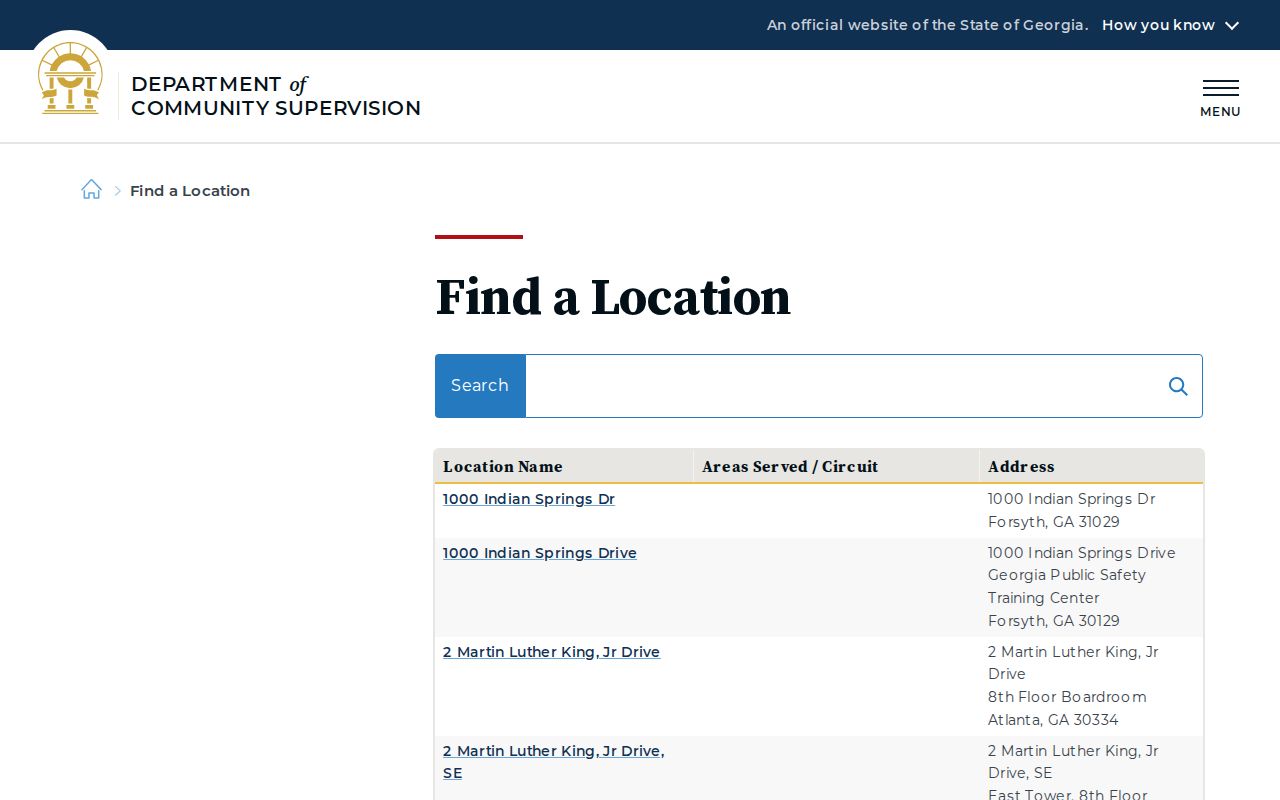
The location page is the maintained source for the office assigned to an Evans County supervision case.
Evans County Parole Hearing Records
Parole eligibility is not a release order. O.C.G.A. 42-9-45 supplies part of Georgia's parole-eligibility framework, while O.C.G.A. 17-10-6.1 imposes special rules for serious violent felonies. An inmate may be eligible yet denied or deferred. Another may be restricted by the sentence and offense. A GDC projected or maximum date also does not show that the board granted parole.
The parole board publishes agency information, calendars, and explanations of its work. Meeting or hearing information can show when the board conducts business, but a calendar entry is not proof of an individual outcome. For one person, match the public parole result and any board action to the GDC record. A status such as active parole means the person is outside prison under supervision, not fully discharged.
Evans County Violations and Absconders
Supervision conditions depend on the sentence, parole certificate, and agency instructions. They may involve reporting, approved residence, travel limits, treatment, payments, or other case-specific duties. Public summaries should never be used to guess a person's exact terms. The official order and supervising agency control.
An absconder notation means the agency reports a failure to maintain required contact or an unknown location. A warrant may also arise from an alleged violation. Neither item is simply another label for release. It is an enforcement status linked to supervision. An old jail record cannot show whether the person was later taken into custody, whether a warrant remains active, or whether a court resolved the violation.
Verify an absconder or warrant entry through DCS, the parole board, or the relevant court. VINELink may help with a later custody change when a participating agency supplies the record, but it is not a parole-condition file. Do not rely on a stale notification to decide present supervision status.
Claxton Reentry and Evans Releases
Smith Transitional Center gives Evans County a distinct state-corrections reentry path. GDC identifies the Claxton site as a minimum-security transitional center for adult male felons. People there remain in state custody while preparing for community return. Leaving Smith is therefore not an Evans County jail release, even though the facility is physically in the county.
Research a Smith departure through the official GDC facility page, the GDC offender record, and any parole or DCS status. A county roster does not follow a state inmate through that process. If parole begins, the parole board supplies the release decision and DCS handles community supervision. If the record shows discharge instead, confirm whether the state sentence and all supervision have ended.
This local distinction matters because Claxton also has other state correctional facilities. Physical location does not decide who owns the record. The custody agency does.
When Evans County Supervision Ends
Release from a cell and discharge from supervision are separate milestones. Parole may continue until the controlling sentence ends or the board issues the applicable discharge. Probation usually continues for the term in the court order unless a later order changes, revokes, or ends it. First-offender treatment under Georgia law can add another discharge-related record, but the exact effect depends on the case and order.
Use the source that imposed the status. For probation, read the Evans County court docket and final order. For parole, check the board and state corrections record. For either one, DCS may confirm that active supervision has closed, within its disclosure rules. A missing name in a public search does not prove discharge because online coverage and retention vary.
When sources disagree, preserve the dates and wording from each record and ask the originating office to reconcile them. A certified court or agency record carries more weight than a live search screen. Full discharge means the stated legal obligation ended; it does not erase the underlying case unless a separate restriction or sealing rule applies.
A practical review should follow the sentence from start to finish. Read the court disposition to see whether it imposed probation, prison, or a split term. Then compare the GDC status when state custody was involved. A board result can show whether parole changed the custody portion, while DCS routing identifies the community office. Finally, look for a discharge entry or later court order. This sequence guards against treating one screen as the whole case.
Dates also need context. A jail release date marks the end of that physical booking. A parole start marks supervised release from a state term. A probation start may arise from the original sentence or from release after confinement. The end date can change after revocation, modification, or another lawful action. Record the label attached to each date and do not merge them into one generic release date.
Public Record Search
Sponsored Results